This conventional oriental sword stands a magnificent display of technique, but what if you wish for to express your unique mode? Adapting your tool is a meaningful journey, allowing you to fashion a truly one-of-a-kind piece. From the shaft wrapping and sheath to the handpiece design and marking, each feature offers a chance for specialized modification. This examination delves into the area of katana adjustments, providing facts for both beginners and proficient enthusiasts searching to form their legacy on the long-standing art of the samurai.
1060 Steel Katanas: The Beginner's Real Skill
For aspirants hoping to embark on the satisfying journey of traditional blade practices , 1060 steel katanas deliver an prime entry point. This selected grade of carbon steel meets a optimal point between economical cost and proficiency. While never as hard as top-tier steels, 1060 facilitates a fair level of knife work , making it tailored to trainees to improve the fundamentals of katana upkeep and admire the charm of original Japanese weaponry. It’s a remarkable choice for fostering experience without the fiscal burden of more elite steels.
T Ten Alloy Weapons : Optimizing Excellence and Value
Providing for devotees seeking an authentic cutlass experience without overpowering the cash reserve , T10 substance katanas represent a appealing option. These armaments offer a marked improvement in resilience compared to cheaper alternatives, exhibiting decent edge retention and sufficient flexibility for rudimentary slashing techniques. While not rivaling the eminent characteristics of advanced steels like T100 or folded alloy , T10 provides a impressive blend of functionality and profitability, making them a appreciated choice for initiates and those on a fixed budget .
Beyond the Sharpness : Adapting Your Cutting Weapon's Hardware and Hold
Though the refined edge is undeniably the essential point of a katana, truly boosting its presence lies in the careful customization of its elements and hilt . This process allows owners to reveal their unique design . Reflect on the vast possibilities: menuki - decorative ornaments that add visual charm ; the hamon sleeves – often exquisitely chiseled; the tsuka foundation itself, wrapped in customary ito twine ; and the fusa terminal , which can be crafted from various resources like precious metals or cartilage .
- Choose subjects that connect with you.
- Assess with varying resources .
- Emphasize strength for a enduring influence .
The Fascination of the Katana: Origins, Mastery, and Material
Each nihonto exhibits a matchless allure, steeped in epochs of Asian history and tradition . More than merely a implement of military action , it's a figure of the bushi ethos – a fusion of dexterity and rule. Its evolution spanned plentiful generations, with early blades evolving into the refined curvature and dangerous edge we accept today. The craftsmanship involved is truly astounding , requiring ages of coaching to master . The process involves a intricate folding of refined metal , creating layers that fortify the instrument’s flexibility and cutting ability. Multiple schools of blacksmithing appeared , each with their special secrets and formulas for achieving the ideal equilibrium and edge - a truly strenuous pursuit.
- First Katana classes
- The responsibility of the historical weapon in champion culture
- Traditional smithing methods
Deciding the Best Steel for Your Japanese Sword Project: 1060 vs. T10
Deciding on the suitable steel is remarkably important for any blade project, and the selection between 1060 and T10 can be challenging. 1060 is a common American metal, offering a decent balance of strength and toughness, making it appropriately easy to condition. However, T10, a Far Eastern steel, ordinarily boasts increased wear sustainability and can conceivably achieve a more peak hardness, although it can be somewhat difficult to apply and requires detailed heat annealing. Consider your proficiency and projected results: for a trainee, 1060 may be a safer platform, while the seasoned smith might seek the additional details of T10.
- Manageability of Managing
- Surface
- Final Stiffness
Discovering Power: Refined Katana Adaptation Practices
Advancing competence in blade customization extends far beyond basic honing. Serious enthusiasts are now studying advanced techniques to truly liberate a blade's hidden potential. This incorporates intricate work with the blade border, utilizing specialized compounds for differential annealing and carefully identifying the profile of the hilt guard to optimize balance and efficiency. Beyond purely functional enhancements, artisans are increasingly focused on reaching unparalleled aesthetic beauty, through complex cutting and layered surfaces that truly transform a katana into a artistic composition.
Forging a 1060 Katana: From Raw Metal to Masterpiece
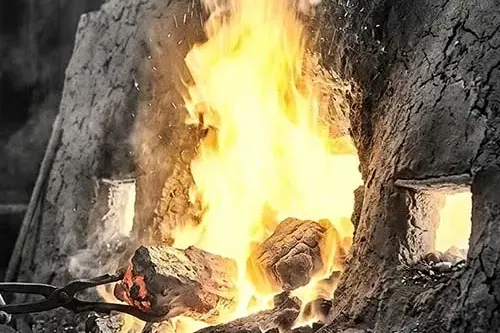
The journey originates with conventional 1060 alloy , a robust material far removed the ornate katana it will change . Talented bladesmiths use a detailed process of layering and forming the crude steel, repeatedly burning it and flattening it to discard impurities and build a uniform grain structure. This exhausting process, often going on for months , builds the imperative strength and elasticity characteristic of a original Japanese sword . Continued heat samurai sword manipulations , including accurate hardening and cooling , are fundamental to achieve the desired harmony of sharpness, persistence and magnificence.- Layering: Minimizes impurities and constructs grain structure.
- Fabricating: Shapes the steel into the initial blade form.
- Annealing: Establishes the final hardness and flexibility.
The Persistent Magnetism of the Katana: Thorough Examination of Alloy and Modification
That time-honored katana lasts a powerful symbol for Japanese artistry , its charm far outshining mere artillery . Forged from select steel and usually featuring intricate designs , the method of creation itself is a revered art. Beyond the core craftsmanship, the ability to modify a katana - from the temper curve to the haft wrapping and clasp - opens for a sincerely individual communication for both supporters and followers alike. This amalgamation of tradition-rooted steelwork and boundless personalization brings the katana's continued presence across the terra .